Why Does My Dryer Keep Giving Me an Error Code? (And What It Means for Your Home)
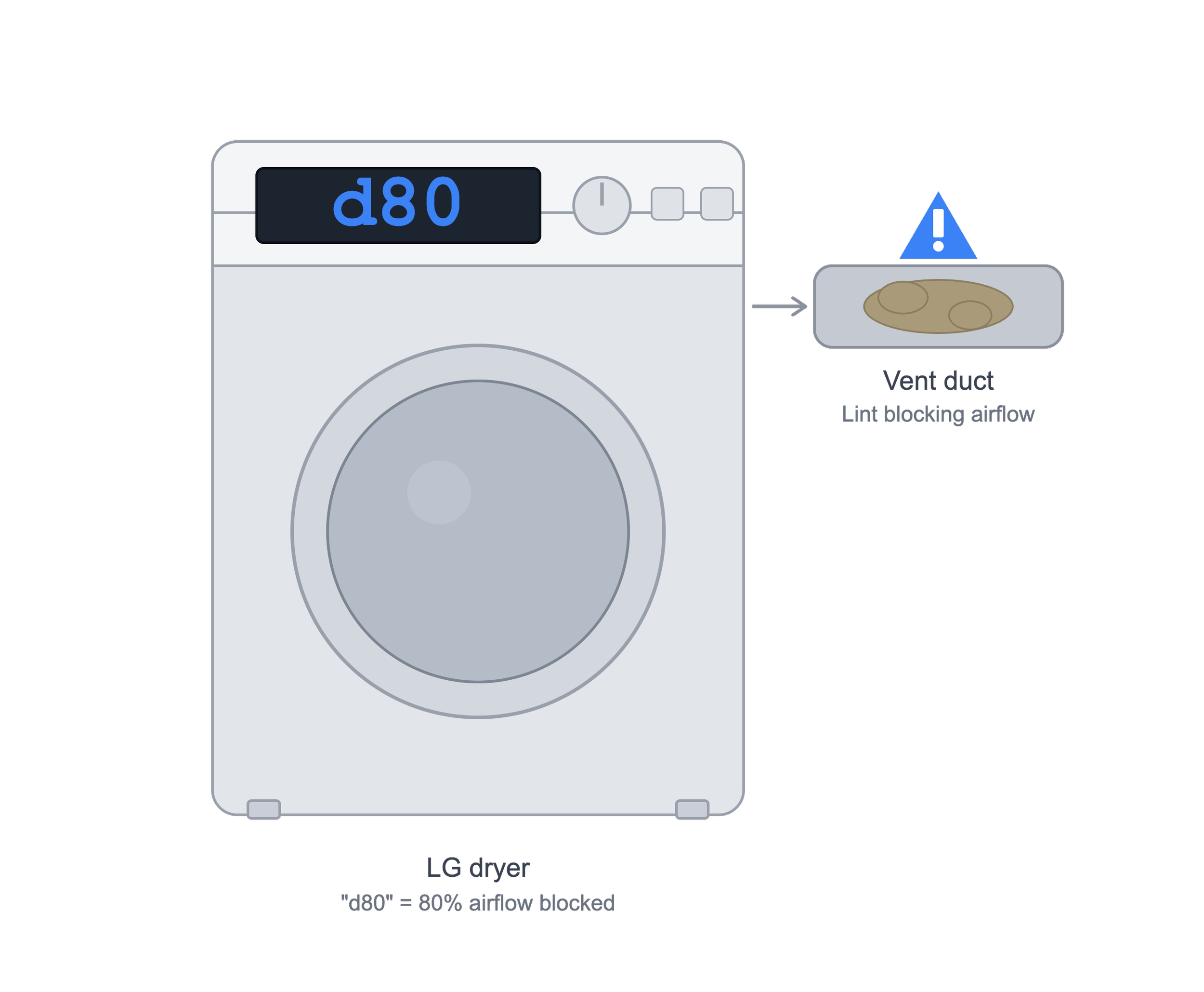
If your dryer has started flashing a code, buzzing at you mid-cycle, or shutting off before your clothes are dry, you're not imagining it — and it's not random. Modern dryers are built with sensors that constantly monitor airflow, temperature, and moisture. When something isn't right, the control board throws a code to warn you before the problem turns into a bigger (and potentially dangerous) one.
The good news: the vast majority of dryer error codes trace back to a single root cause — restricted airflow from a clogged dryer vent. Here in Connecticut, where long vent runs, multiple elbows, and older homes are common, this is by far the most frequent reason we get called out to a house.
The Most Common Culprit: Airflow Restriction Codes
Every major brand has its own version of the same warning. If you've seen one of these on your dryer's display, your vent system is almost certainly asking for help:
Whirlpool, Maytag & Amana: "AF" — Restricted Airflow
LG: "d80," "d90," or "d95" — signals that up to 80–95% of normal airflow is blocked
Samsung: "C80," "C90," "9C1," "9C2," or "HC" — airflow or overheating warnings
Kenmore: "F30" or "PS" — lint or fabric softener residue restricting the vent
GE: often no code at all, just a flashing lint or vent-check indicator light
Even if your specific model doesn't display one of these exact codes, any error tied to overheating, long dry times, or a "check vent" message points to the same underlying issue: air isn't moving through the vent system the way it should.
Why Airflow Restriction Happens
A dryer vent's job is simple — pull hot, moist air (and lint) out of your home. Over time, several things get in the way:
Lint buildup inside the vent line itself. The lint trap only catches a portion of the lint your clothes shed. The rest travels down the duct and sticks to the walls of the vent, especially at bends and elbows.
Long or twisty vent runs. The more turns and distance between your dryer and the exterior vent hood, the more resistance the air has to fight through — and the more lint has a chance to collect.
Crushed, kinked, or disconnected ductwork. Flexible foil or vinyl ducting can get pinched behind the dryer or crushed if the unit gets pushed back against the wall.
Pests and debris at the exterior vent hood. Birds, squirrels, and even bees are known to build nests right at the outside vent flap, especially during CT's spring and summer months.
Fabric softener and dryer sheet residue. This builds up on the lint screen and inside the vent, gradually choking off airflow even if you clean the lint trap every load.
Why You Shouldn't Ignore the Code
It's tempting to just hit "reset" and run another cycle. But an ignored airflow error is more than an inconvenience — it's a fire risk. According to the National Fire Protection Association, dryers and washing machines are involved in an estimated 15,000+ home fires every year in the U.S., and failure to clean the dryer vent is consistently cited as a leading contributing factor.
Beyond safety, a clogged vent also means:
Longer dry times — sometimes two or three cycles to get clothes fully dry
Higher energy bills — your dryer works harder and longer for the same result
Excess heat buildup — which shortens the lifespan of your dryer's heating element and motor
Increased carbon monoxide risk for gas dryers, since exhaust can't properly vent outside
What You Can Check Yourself First
Before assuming the worst, there are a few quick things worth checking:
Clean the lint screen thoroughly, including washing it with warm water if it feels waxy or coated (a sign of dryer sheet residue).
Check behind the dryer for a crushed, kinked, or disconnected vent hose.
Look at the exterior vent hood to make sure the flap opens freely and isn't blocked by debris, snow, or a nest.
Power cycle the dryer — unplug it for a minute or two, then restart a cycle to see if the code clears.
If the code comes back after a clean lint screen and a power cycle, the blockage is almost certainly further down the line — inside the vent duct itself, where a homeowner can't easily see or reach.
When It's Time to Call a Professional
If you've checked the basics and the error keeps returning, or it's simply been a year or more since your last professional cleaning, it's time to have the full vent system inspected. A proper dryer vent cleaning clears lint from the entire duct run — not just what's visible at either end — and confirms that air is moving freely from the dryer all the way to the outside vent hood.
This is exactly the kind of full-system service Quags Dryer Vent Cleaning was built around. As Connecticut's trusted experts in dryer vent maintenance and fire prevention, our C-DET certified technicians inspect, clean, and photograph the before-and-after results of every job, so you can see exactly what was blocking your airflow — whether it's built-up lint, a bird's nest, or a crushed section of duct.
Frequently Asked Questions
What does the "AF" code mean on a Whirlpool or Maytag dryer? AF stands for Restricted Airflow. It means the lint screen or vent system is blocked, kinked, or has too many turns for air to move through properly.
What does d80 or d90 mean on an LG dryer? These codes mean your vent is 80–90% blocked, based on LG's airflow sensors. The dryer will still run, but it's a strong warning that the duct needs to be cleared.
What does C80 or C90 mean on a Samsung dryer? Similar to LG's codes, C80/C90 indicate a significant airflow restriction — usually lint buildup somewhere in the vent line rather than the lint trap itself.
Can I clear a dryer error code myself? Sometimes. Cleaning the lint screen and power-cycling the dryer clears temporary codes. If the code returns, the blockage is likely further down the vent duct and needs a professional cleaning.
How often should I get my dryer vent professionally cleaned? Most homes should have their vent cleaned once a year. Homes with long vent runs, multiple people doing laundry daily, or pets may need it more often.
Is a clogged dryer vent actually a fire risk? Yes. The NFPA cites dryer vent lint buildup as a leading factor in the 15,000+ home dryer fires reported annually in the U.S.
Don't Wait for the Next Error Code
An error code is your dryer's way of asking for help before something worse happens — a breakdown, a spike in your energy bill, or in the worst case, a fire. If your dryer has been throwing codes, running hot, or taking longer than usual to dry a load, it's a good sign your vent system needs attention.
Book a dryer vent cleaning with Quags today and let our team clear the blockage, restore proper airflow, and give you peace of mind — whether you're in Farmington or anywhere within our Connecticut service area.
📞 Call 860-996-2240 or visit www.quagsdryerventcleaning.com to schedule your appointment.